PRF hair restoration is emerging as a leading, minimally invasive option for people seeking natural scalp rejuvenation without the downtime or risks of surgery. In this guide you will learn what PRF is, how it compares to other regenerative treatments, who makes a good candidate, what to expect during and after the procedure, and how to evaluate results. The pace of innovation in hair restoration is fast, and understanding the science behind platelet-rich fibrin helps patients make informed choices about their care.
Throughout this article we’ll use clear clinical evidence, practical patient guidance, and real-world considerations so you can decide whether PRF hair restoration fits your goals. You’ll also find links to our related services and technology pages, plus a way to preview potential outcomes with our clinic’s simulation tool. Whether you are early in your hair-loss journey or exploring adjunctive options after a transplant, this article will give you a structured, actionable overview of PRF for hair.
What is PRF and how does it work for hair?
Platelet-rich fibrin, commonly abbreviated PRF, is a second-generation platelet concentrate derived from a patient’s own blood. The process captures platelets, white blood cells, and a fibrin matrix in a small volume of serum, creating a biologically active scaffold that releases growth factors slowly over days to weeks. For hair, these growth factors — including PDGF, TGF-beta, and VEGF — act locally to stimulate dormant hair follicles, enhance microcirculation in the scalp, and support the local stem cell niche in a way that can improve hair thickness and growth cycles.
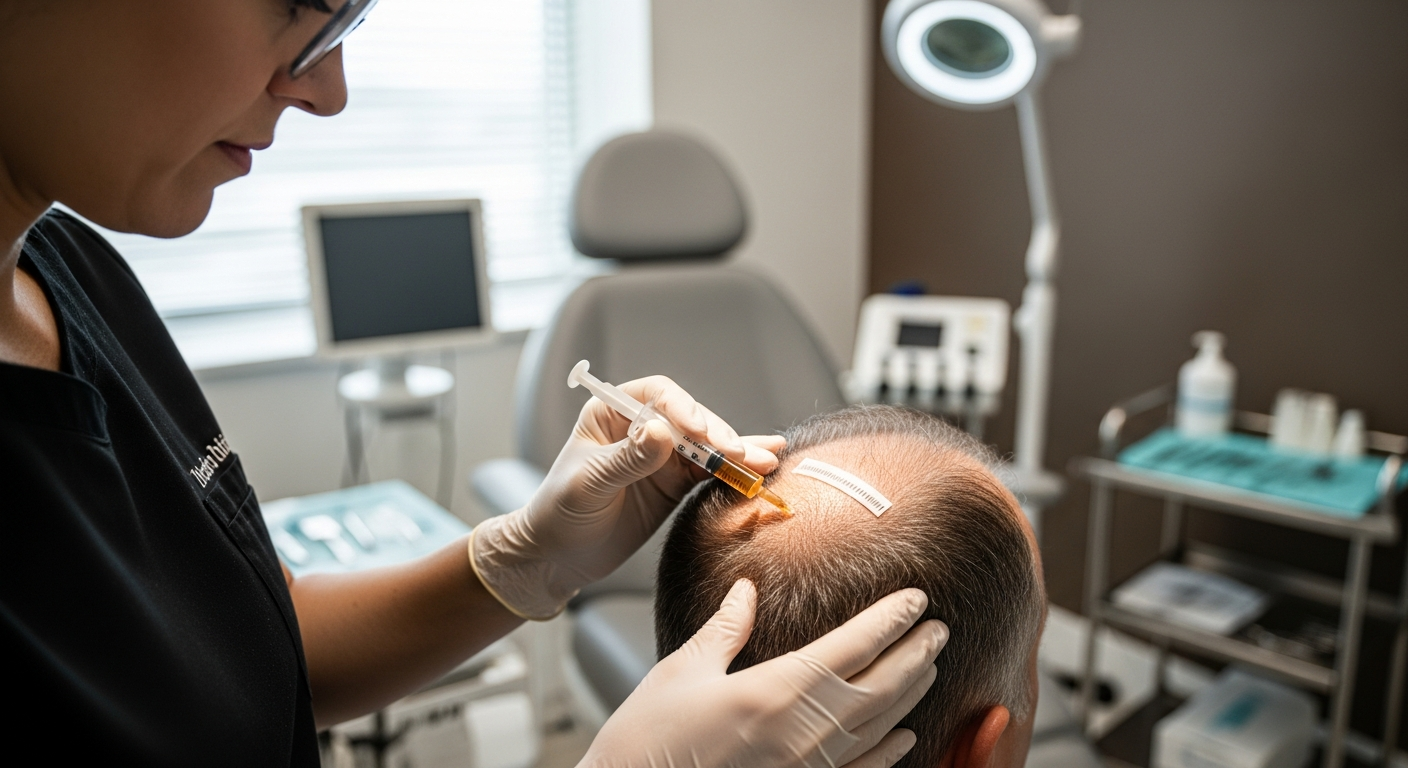
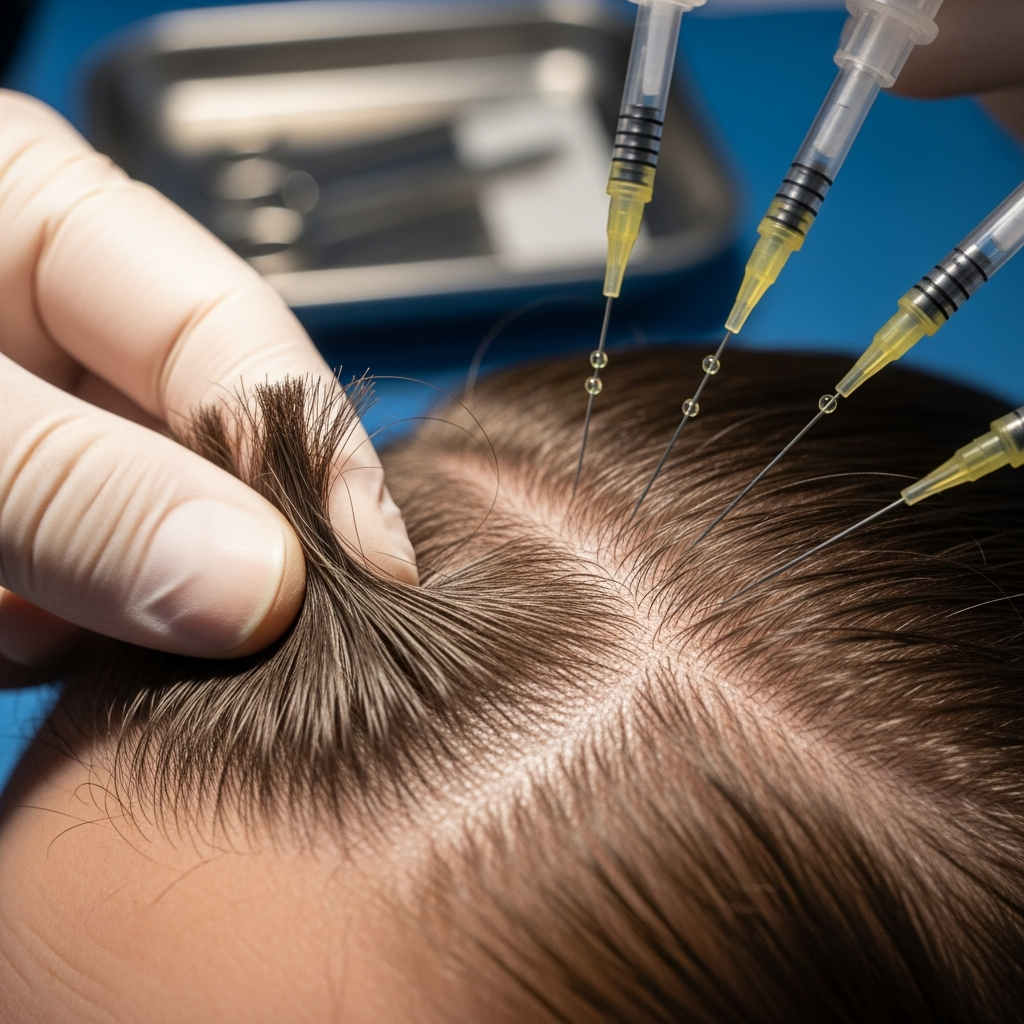
Clinically, prf hair restoration is delivered via a series of microinjections across a thinning scalp, often combined with scalp microneedling to increase local tissue responsiveness. Because PRF is autologous, the risk profile is favorable: allergic reactions and transmissible disease concerns are negligible when proper sterile technique and processing protocols are followed. That safety and the regenerative biology behind PRF are why many clinics add PRF to their non-surgical hair-restoration pathways and as a complement to hair transplant procedures; see our services page for combined protocol options.
While PRF is not a magic cure for all types of hair loss, its mechanism—delivering sustained growth factor release within a fibrin scaffold—makes it especially useful for early androgenetic alopecia, diffuse thinning, and as an adjunct to surgical restoration. Research continues to refine ideal dosing, centrifugation protocols, and combination therapies, and our technology page outlines the equipment and quality controls we use to ensure reproducible PRF preparations.
Who is a good candidate for PRF hair restoration?
Identifying a good candidate for prf hair restoration starts with diagnosing the type and stage of hair loss. Patients with early to moderate androgenetic alopecia, telogen effluvium transitioning toward chronic thinning, or those seeking improved density after a hair transplant commonly experience benefit. Because PRF relies on viable follicular units capable of being stimulated, individuals with extensive scarring alopecia or long-standing, total baldness where follicles are irreversibly lost are less likely to respond.
A comprehensive consultation typically evaluates medical history, bloodwork, medication use, and any contributing nutritional or hormonal factors that could limit PRF efficacy. Smoking, uncontrolled diabetes, and certain auto-immune conditions can reduce regenerative capacity; discussing these with your clinician helps set realistic expectations. If you are considering female-specific care, our team also offers dedicated pathways such as a targeted consultation for women, including options like Female Hair Transplant and complementary PRF protocols to address female-pattern hair loss.
Candidates should also be informed about treatment cadence and commitment. Typical PRF protocols involve an initial series of treatments spaced one month apart followed by maintenance sessions every 3–6 months. This schedule is personalized based on response and objective measures such as trichoscopy, and you can learn more through a tailored discussion by booking a visit via our consultation service.
Ready to take the next step?
Book a Free ConsultationWhat to expect during the PRF procedure and recovery
The PRF procedure begins with a simple blood draw, usually 10–60 ml depending on the protocol, which is then placed into specialized tubes and centrifuged under strict, validated parameters. The clinician extracts the PRF clot and prepares it for injection; this entire preparation typically takes 15–20 minutes and is performed in a sterile environment to minimize contamination risk. When you arrive for your appointment, expect an initial intake, photographic documentation, and brief local anesthesia to make the injections comfortable.
During injection, the provider administers multiple small-volume intradermal or subdermal injections across the thinning area. Techniques vary: some clinicians layer PRF into the scalp with microneedling or combine it with topical agents to enhance penetration. The actual treatment session lasts roughly 30–60 minutes depending on the area treated. You may experience mild swelling, pinpoint bleeding, or transient soreness; these reactions typically resolve within 48–72 hours and do not interfere with most daily activities.
Recovery is straightforward: avoid vigorous exercise and scalp manipulation for a few days, keep the area clean, and follow any topical or medication guidance from your clinician. Visible improvement can take 3–6 months because hair growth cycles are slow, and objective gains in density or shaft thickness are often confirmed after repeated sessions. For a clear sense of potential results before committing, try our clinic’s interactive preview tool and simulate outcomes with real photos.
"PRF harnesses the body’s own reparative signals to create a sustained microenvironment for follicular improvement — a pragmatic, low-risk step in modern hair restoration."
Effectiveness, evidence, and combining PRF with other therapies
Clinical studies and observational reports show promising improvements in hair density and thickness with PRF, though protocols vary widely across trials. Many of the strongest outcomes occur when PRF is combined with evidence-based adjuncts such as topical minoxidil, oral therapies when appropriate, low-level laser therapy, or as an adjunct to follicular unit transplantation. The synergistic effect is logical: PRF primes the scalp’s biological environment while other modalities target follicular cycling and androgen signaling directly.
Comparative studies between PRF and platelet-rich plasma (PRP) suggest PRF may sustain growth factor release longer due to its fibrin matrix, potentially improving outcomes. Nevertheless, head-to-head, randomized data remain limited, and practitioners should lean on reproducible technique and patient selection. At our clinic we integrate outcome tracking tools and offer a transparent results gallery; prospective patients are encouraged to view real cases in our gallery and read firsthand experiences on our testimonials page to understand the range of likely outcomes.
When considering combined treatment pathways, it’s important to coordinate timing. For example, scheduling PRF sessions before or after a transplant should be done with the operating surgeon to avoid interference with graft survival while maximizing regenerative benefits. Our surgical and non-surgical teams work together to create individualized plans that use PRF where it will add the most value; more on our integrated approach is available on the services overview.
Want personalized advice?
Schedule Your AssessmentCosts, planning, and long-term maintenance
Cost for prf hair restoration varies by geography, provider expertise, and the number of sessions required. Typically, a series of three initial treatments followed by maintenance sessions will reflect the most common pricing structures. Financial planning should factor in initial consultation fees, any adjunctive therapies, and the possibility of longer-term maintenance treatments to preserve gains. Our clinic offers transparent pricing and financing options, and you can start the conversation through our contact page to create a realistic treatment plan.
When planning, consider scheduling flexibility for the initial intensive phase, as most patients opt for monthly sessions during the early phase. Documentation and standardized photography at baseline and follow-up visits are vital for tracking progress, as subtle improvements in hair caliber and coverage can be difficult to perceive without objective comparison. We recommend patients also address modifiable contributors like nutrition, stress, and smoking cessation to maximize treatment response and preserve long-term results.
Finally, patient education and realistic expectations are central to satisfaction. While many respond well to PRF, a subset of patients will require additional interventions such as surgical restoration or systemic therapy. If you’re evaluating both surgical and non-surgical routes, our team can walk you through comparative outcomes and next steps — read more about our quality assurance and patient commitments on the assurance page.
"A structured plan, realistic expectations, and consistent maintenance are the three pillars of lasting success in regenerative hair care."
Conclusion — deciding if PRF is right for you
Choosing prf hair restoration is a decision best made with accurate diagnosis, expert guidance, and a defined plan for follow-up and maintenance. For many patients with early-to-moderate thinning, PRF offers a low-risk, autologous approach that can meaningfully improve hair thickness, scalp health, and patient confidence. Because responses vary, combining PRF with other evidence-based therapies or surgical solutions can optimize long-term outcomes.
If you’re curious about personalized results, take advantage of our visual simulator to preview potential improvements before committing to a treatment plan. You can also arrange a focused consultation to discuss candidacy, costs, and the best clinical pathway for your situation through our consultation page. For those ready to explore visual outcomes now, try our interactive preview here:
See your potential results before you commit.
To learn more, review our detailed service descriptions, examine real patient galleries, and read testimonials from people who chose regenerative approaches. When you’re ready, our team is available to guide you through the evaluation and build a plan that aligns with your goals. Book an appointment, ask questions, and take the next step toward informed hair restoration.
Medical Information Disclaimer
This content is provided for general educational purposes only. It is not a substitute for professional advice, diagnosis, or treatment. Readers are advised to consult qualified professionals for personalized recommendations.
See how we can help you
Get Started Today