Understanding the critical window after a hair transplant separates good results from exceptional, long‑lasting outcomes, and no one communicates those stakes more clearly than FUEsion Hair Clinics. For patients searching for trustworthy Hair Transplant Aftercare Tips, the path forward should begin with evidence‑based steps and surgeon oversight; at FUEsion Hair Clinics every protocol is designed, overseen and guaranteed by board‑certified surgeons to protect graft survival and patient comfort. Explore our Services Overview, learn about the FUEsion Technique, or Book a Free Consultation to speak directly with a surgeon and get personalised aftercare directions.
Why this matters now is simple: early post‑op behaviours influence healing, graft integration and the esthetic trajectory for 12–18 months. The instructions you follow in the first two weeks affect visible growth at six months and final density at a year, which is why FUEsion Hair Clinics pairs surgeon‑led procedures with a robust aftercare plan backed by the FUEsion Assurance. If you want the best practice recommendations, plus tools like the Graft Calculator and the AI Hair Simulator to visualise your recovery timeline, this guide walks you through the precise Hair Transplant Aftercare Tips our surgeons endorse.
Why Post‑Op Care Changes Outcomes — The FUEsion Approach
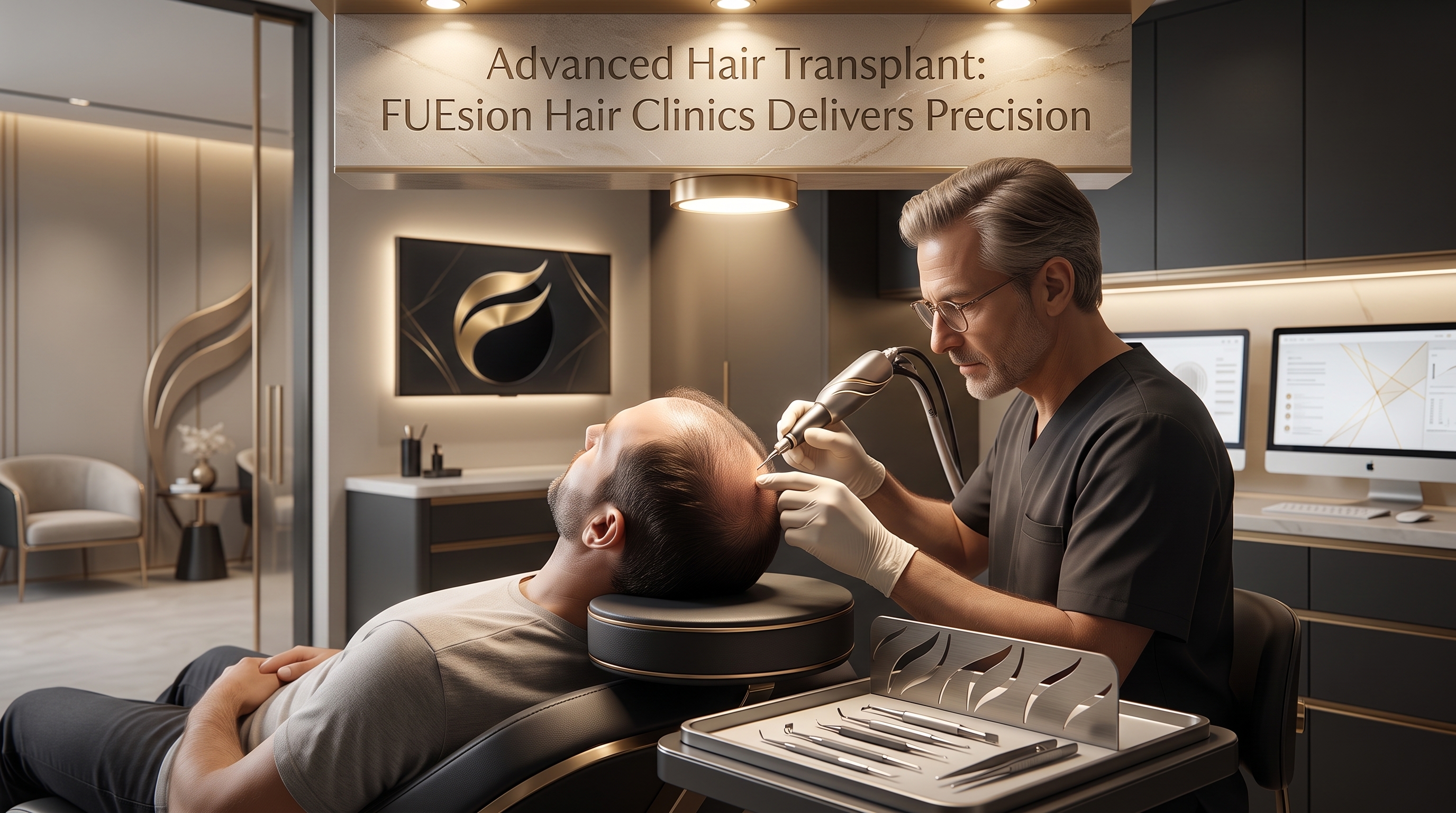
Post‑op care after hair restoration is more than a list of do's and don'ts; it's the continuation of a surgical strategy that begins with planning and culminates in months of biological integration, and FUEsion Hair Clinics treats aftercare as an extension of surgery. Our surgeon‑only model ensures that the same minds who plan and perform the procedure also set the recovery milestones, which reduces variability and maximises graft survival rates claimed to be over 95%. By combining the FUEsion Technique planning with a tailored aftercare protocol, patients benefit from continuity of expertise and clear escalation paths if healing does not follow expected norms.
Clinical evidence supports that careful handling, cooling, and timely revascularisation of grafts raise long‑term hair survival; our proprietary graft holding solution and micro‑punch extraction are designed to lower transection and desiccation risk during surgery, while post‑op instructions are optimised to protect those gains. At FUEsion Hair Clinics we provide specific guidance on sleeping positions, scalp hygiene, short‑term activity limits, and topical protocols that are synchronised with the physiology of the grafts. If you want a precise, surgeon‑approved aftercare plan, our team will walk you through it during your Free Virtual Consultation and supply written instructions for every phase of recovery.
Services & Procedures: What Aftercare Looks Like for Each Treatment
Every service at FUEsion Hair Clinics has a mapped post‑operative regimen designed around the specific biological needs of that treatment, and we publish timelines so patients know what to expect at 1, 6 and 12 months. Our full service menu includes surgical and non‑surgical options and the associated aftercare protocols for each procedure, so you receive instructions tailored to your plan; see our See Our Full Services page for details and to decide which pathway matches your clinical goals.
Listed below are our published services with the post‑op highlights patients should know:
- FUEsion Hair Transplant (AI & AR Assisted FUE) — Duration: 4–7 hours; downtime 5–7 days; visible improvement 6 months, full results 12–18 months; clinic‑claimed graft survival over 95%. Aftercare emphasises gentle wash protocols, staged activity increases, and scheduled follow‑ups.
- FUEsion Beard Transplant — Typical graft count 300–2,500; downtime ~5 days; natural growth 6–8 months; aftercare focuses on irritation control and targeted shaving timelines.
- FUEsion Eyebrow Transplant — 50–400 grafts per eyebrow; duration 2–4 hours; minimal downtime; aftercare includes precise protection of transplanted follicles and pigment‑safe cleansers.
- Female Hair Transplant (specialised protocols) — tailored assessment for Ludwig stages and traction alopecia; aftercare reduces tension and supports scalp health to protect delicate donor and recipient sites.
- FUT, PRP therapy, scalp micropigmentation, InFuze™ Non‑Surgical Hair Restoration — each modality has tailored post‑procedural instructions; non‑surgical InFuze™ allows zero downtime while surgical options require staged recovery.
For comprehensive post‑op checklists and appointment scheduling, visit our FUEsion Assurance page and our Book a Free Consultation portal so a surgeon can define the exact aftercare timeline for your chosen service. We emphasise clarity at discharge, give written instructions, and assign a post‑op contact so you have direct access to care guidance while you heal.
Ready to take the next step?
Book a Free ConsultationTechnology & Technique: How FUEsion Reduces Post‑Op Risk
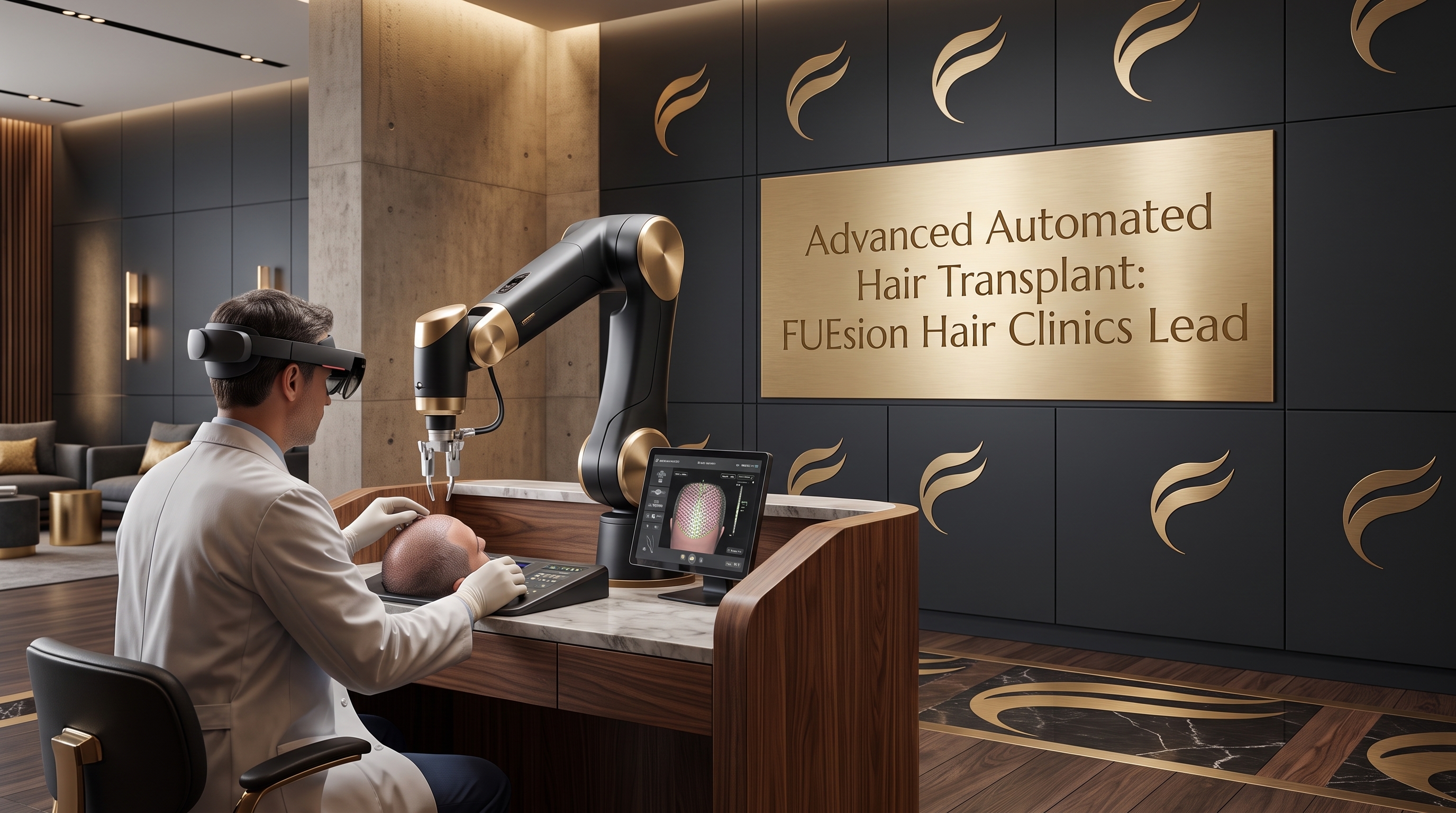
Technology matters for aftercare because surgical precision and graft handling reduce complications and set the stage for predictable healing; at FUEsion Hair Clinics we integrate multiple platforms to lower postoperative risk and simplify recovery. Our Technology Overview outlines the FUEsion Technique, which uses AI & AR assisted donor mapping, micro‑punch extraction, microscopic graft inspection and a proprietary graft holding solution to preserve follicle viability before implantation. These intraoperative safeguards translate directly into fewer post‑op irritations, faster reattachment of grafts, and clearer instructions for patients to protect their investment in the first critical weeks.
Non‑surgical adjuncts like InFuze™ ScalpPulse Technology and the marketed InFuze™ Non‑Surgical Hair Restoration programme provide additional options for scalp health without incisions or needles, and they can be integrated into post‑op protocols where clinically appropriate. Our AI Hair Studio environment and AI Hair Simulator also play a role in pre‑op planning and post‑op expectations by showing how graft density will evolve, which reduces uncertainty and helps patients follow the most effective aftercare schedule. For a technical walk‑through, try the Calculator & Graft Estimator or the FUEsion Technique overview to see how intraoperative choices inform postoperative directions.
Patient Journey & Consultation: Preparing for Aftercare Before Surgery
Preparation is the first aftercare tip we give every patient: know your plan before you arrive. Use the Graft Calculator (3‑step) and the AI Hair Simulator to preview results and receive an initial graft/cost estimate so post‑op expectations are realistic and structured. Then schedule a Free Virtual Consultation with either Dr. Hootan Zandifar or Dr. Michael Wisiorek, where the surgeon will document your hairline plan and define specific aftercare steps tied to your procedure.
On procedure day our team walks you through immediate‑post‑op instructions and confirms your follow‑up schedule, including the 48‑hour check, 7‑day wound check, and the 12‑month review that activates the FUEsion Assurance benchmarks. If you need resources, our site provides downloadable instructions and contact pathways through the Contact page, and our staff commit to reply within documented windows so you never wait for guidance. These steps reduce anxiety and ensure that early decisions — like when to start gentle washing and when to return to exercise — are taken with surgeon input rather than guesswork.
Want personalized advice?
Schedule Your AssessmentRecovery Best Practices: Practical Hair Transplant Aftercare Tips
Immediately after surgery the first 48–72 hours are the most delicate; follow these practical, surgeon‑approved Hair Transplant Aftercare Tips from FUEsion Hair Clinics to protect grafts and support healing. Keep the head elevated when sleeping, avoid direct pressure on the grafts, and follow the gentle saline or medicated wash routine your surgeon prescribes to clear crusting without dislodging follicles. We instruct patients on how to use the provided saline sprays, when to start the first supervised wash in clinic, and how to identify warning signs like persistent bleeding or excessive pain that require contacting our team.
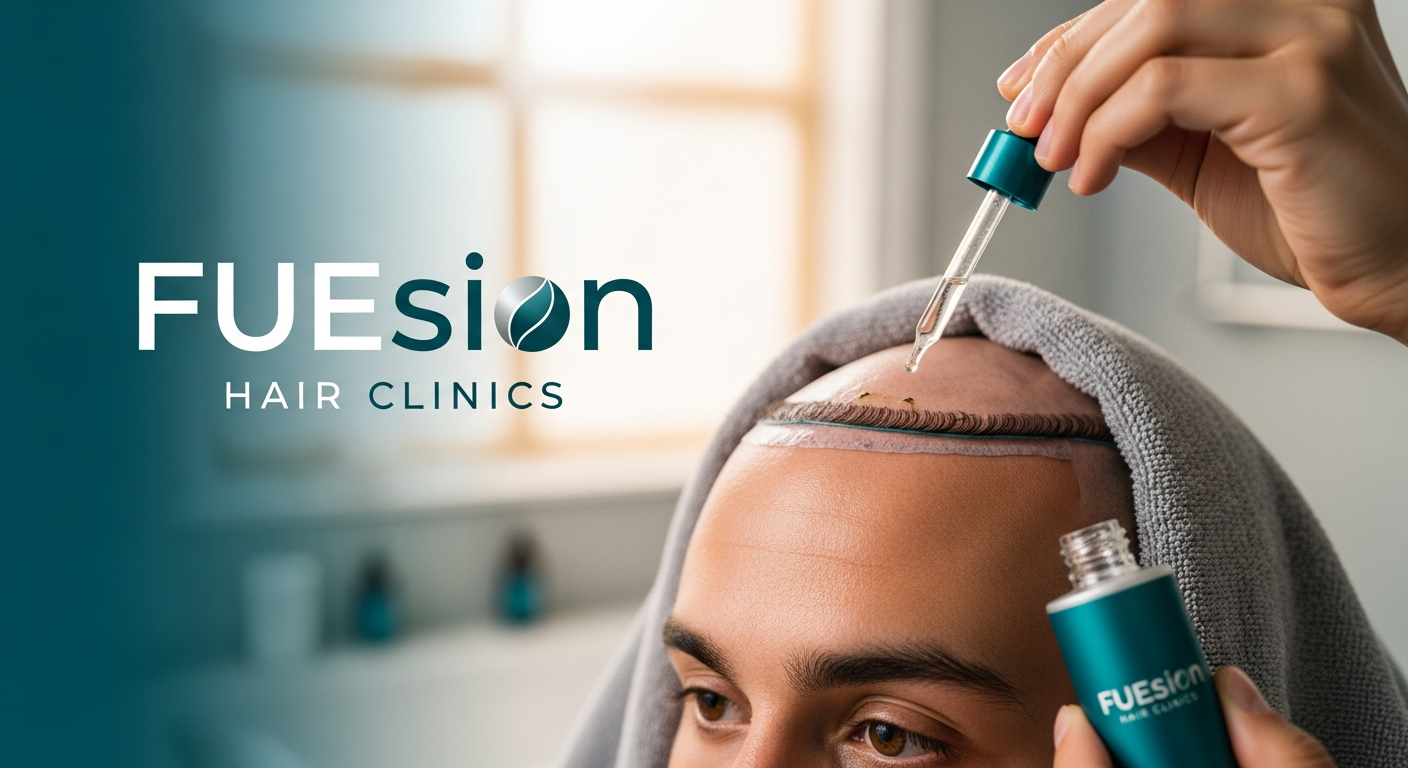
For the first week avoid strenuous exercise, heavy lifting and environments that increase sweating or contamination risk, and do not take blood‑thinning supplements unless cleared by your surgeon. Our post‑op packs include analgesics, topical antimicrobials when indicated, and written timelines for returning to barbering, shaving, or hair colouring. If you are considering InFuze™ Non‑Surgical adjuncts or PRP, your surgeon will advise optimal timing to avoid interfering with graft take and will plan sessions that complement the surgical timeline.
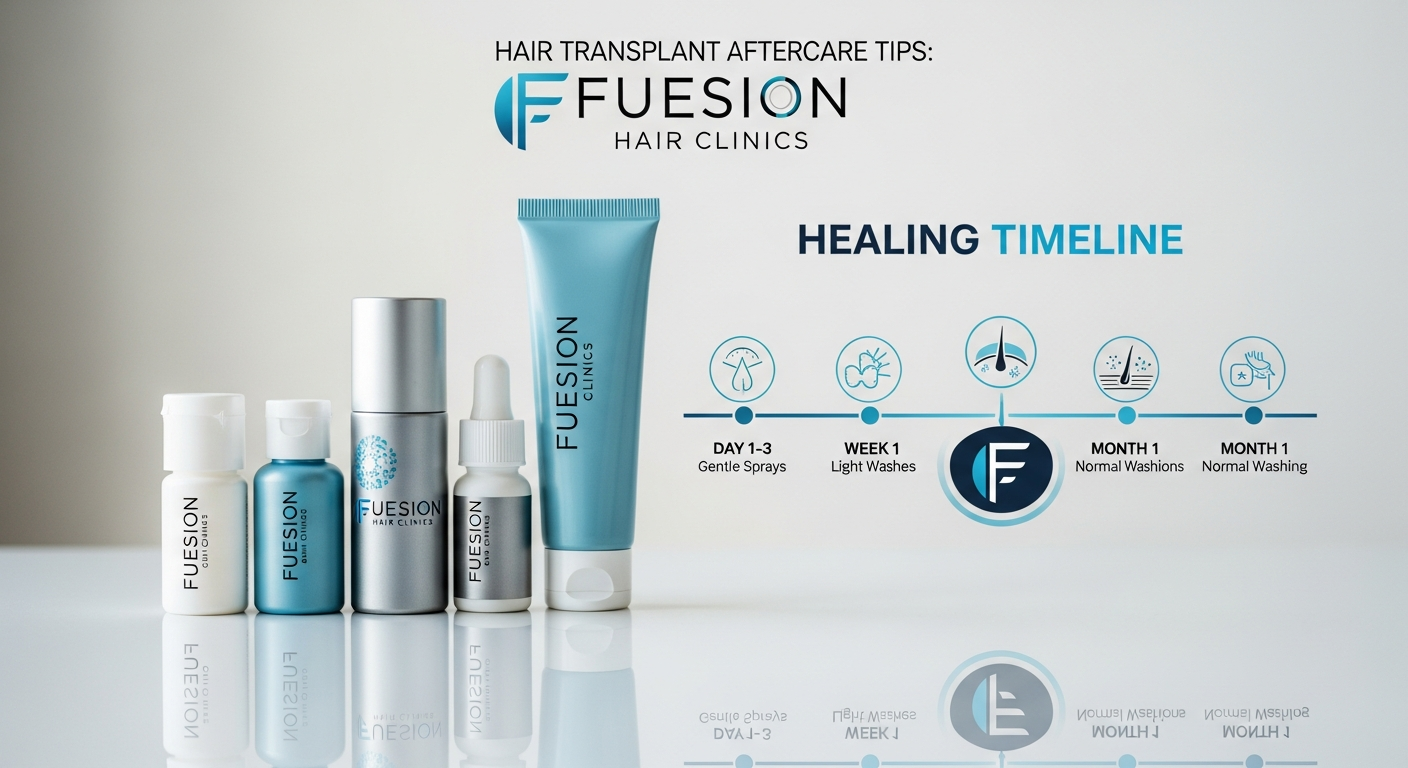
Weeks 2–6 are the period when scabbing resolves and early shedding (the telogen phase) may occur; this is normal and not a sign of failure — our team will document expectations during your discharge briefing so you recognise normal progression. Follow-up visits typically occur at 7–10 days, 3 months, 6 months and 12 months, and the 12‑month review is where growth benchmarks are compared against the FUEsion Assurance criteria. If your results are below the agreed benchmark we will discuss corrective supplementation under the Assurance terms at no additional graft cost when eligible.
Surgical Team & Expertise: Surgeon‑Led Aftercare and Accessibility
Leadership by proven surgeons defines our approach to aftercare; at FUEsion Hair Clinics our procedures are performed and overseen exclusively by board‑certified surgeons, which means the clinical decisions that shape your recovery come from the same professionals who performed your transplant. Dr. Hootan Zandifar, founder and Chief Surgeon, personally oversees treatment plans and is present for procedures under the FUEsion name, while Dr. Michael Wisiorek is a senior surgeon specialising in AI & AR Assisted FUE for scalp, beard and eyebrow work. This continuity enhances post‑op outcomes and simplifies escalation paths when patients need rapid evaluation or adjustments during recovery.
Access to surgeons in the post‑op period is a core part of our aftercare promise; patients can use the Contact page or call our team to request same‑day guidance for concerning symptoms, and routine follow‑ups are scheduled in advance so you can plan around them. For remote patients we provide virtual wound checks, remote photo assessments using secure channels, and guidance for in‑person follow-ups at one of our clinics when needed; see our Locations page for clinic availability and to plan travel for your 12‑month review.
Patient voice: “The surgeon called me personally the morning after my procedure to review my care plan — that access made all the difference.” — excerpted from Testimonials
See how we can help you
Get Started TodayResults, Guarantees & Social Proof: How Aftercare Connects to Outcomes
Transparency around expected timelines and measurable outcomes is part of how FUEsion Hair Clinics reduces postop uncertainty, and our Results Gallery and Testimonials show documented cases where disciplined aftercare contributed to natural, permanent restoration. We publish gallery cases with timelines and graft counts so prospective patients can match their expectations to real examples, and our clinic‑claimed graft survival rate of over 95% is backed by the intraoperative protocols and post‑op instructions our surgeons enforce.
Guarantees are an integral part of aftercare expectations: the FUEsion Assurance includes Growth, Artistry, Aftercare and Satisfaction assurances and defines the 12‑month review metrics that determine corrective supplementation at no cost if agreed growth benchmarks are not met. For procedural details and terms please read the full Assurance Details, and review our Terms & Conditions for operational criteria. Our team also recommends using the AI Hair Restoration Simulation Tool before surgery so you have an objective baseline for evaluating outcomes at follow‑up visits.
Clinical note: “Early adherence to wash protocols and avoidance of direct trauma are the strongest predictors of graft survival in our practice.” — surgical team, FUEsion Hair Clinics
When to Contact Your Surgeon: Red Flags and Routine Questions
Knowing when to seek help is one of the most practical Hair Transplant Aftercare Tips we give patients, and FUEsion Hair Clinics outlines clear escalation triggers so you never have to guess. Call your clinic or use the Contact form if you experience ongoing bleeding beyond the first 24 hours, fever above 101°F, severe pain unrelieved by prescribed analgesia, signs of infection such as spreading redness or purulent drainage, or if a significant number of grafts appear dislodged within the first week. For non‑urgent questions about shampoos, supplements or return‑to‑exercise timing, use your scheduled follow‑up or the virtual consultation pathway; our team typically responds within 2–4 business hours to reduce anxiety and provide clear next steps.
Reassurance for patients: “Most early concerns are manageable with a short clinic visit or a phone review; we prioritise quick access to solutions.” — Patient Care Coordinator, FUEsion Hair Clinics
Free Tools & Resources to Support Aftercare and Expectations
We provide free digital tools that help patients prepare for aftercare, including the AI Hair Simulator, the Graft Calculator (3‑step), and a manual AI‑powered cost estimate to align financial planning with clinical timelines. These tools are intentionally privacy‑respecting (the AI Hair Studio and AI Hair Restoration Simulation Tool do not store photos) and are designed to reduce surprises at follow‑up by setting realistic growth expectations in advance. Use them to generate the documentation you bring to your first post‑op visit so we can objectively compare progress to the planned trajectory and the FUEsion Assurance benchmarks.
Launch these resources before your consultation to make the most of your time with a surgeon: try the AI Hair Simulator to visualise density changes and the Graft Calculator to estimate graft counts, and then Book a Free Consultation to convert those estimates into a personalised post‑op plan with a surgeon.
Practical Packing List & Pre‑Op To‑Dos for Seamless Aftercare
Preparation at home sets the tone for recovery; bring loose button‑down shirts, the recommended analgesics, saline spray provided by our clinic, and any scalp‑friendly ointments we prescribe. Make arrangements for a friend or family member to assist for the first 48 hours if possible, and set up a sleeping area where your head can remain elevated to reduce swelling. Finally, confirm your follow‑up appointments and review the discharge packet so you understand wash schedules, activity restrictions and the contact pathway if issues arise; this small investment of preparation improves outcomes and reduces stress during the critical early phase.
Evidence & Further Reading
For patients who want to read clinical guidance on wound care and hair transplant recovery, trusted resources include the American Academy of Dermatology and the Mayo Clinic which provide general post‑op wound management advice that complements our surgeon‑specific protocols. See the AAD's guidance on postoperative wound care and the Mayo Clinic's resources on surgical recovery for scientifically grounded principles that inform our protocols (American Academy of Dermatology, Mayo Clinic). These external sources support the importance of infection control, activity modification and graded return to normal routines — principles embedded in FUEsion Hair Clinics aftercare plans.
Frequently Asked Questions
How long should I follow strict aftercare instructions?
Typically patients follow strict care for the first 7–14 days, gradually returning to normal activities over 4–6 weeks under surgeon guidance; visible regrowth often begins around 3–6 months and final results are evaluated at 12 months and beyond. At FUEsion Hair Clinics we schedule routine follow‑ups and a 12‑month review to compare progress with the FUEsion Assurance benchmarks and to decide on any corrective supplementation.
When can I wash my hair after a transplant?
Your surgeon will usually instruct a gentle first wash within 48–72 hours or at the in‑clinic 48‑hour check, and a staged return to normal shampooing after crusts fall away; use only the products recommended by your surgical team to avoid irritation. If in doubt, contact our post‑op line via the Contact page for surgeon advice.
Is swelling normal and how can I minimise it?
Yes, mild forehead and eyelid swelling is common and can be reduced by sleeping with the head elevated, using cold compresses as instructed, and following anti‑inflammatory guidance provided by your surgeon; persistent or asymmetric swelling should be evaluated promptly. At FUEsion Hair Clinics we monitor postoperative swelling and provide strategies to manage it proactively.
When will I see the final results?
Most patients observe noticeable improvement by six months and full maturation by 12–18 months; exact timing depends on graft count, individual biology, and adherence to aftercare. The FUEsion Assurance framework documents expected timelines and defines corrective options if growth benchmarks aren't met at the 12‑month review.
Can I use topical or oral hair growth products during recovery?
Discuss any topical or oral agents with your surgeon before starting them; some products are recommended at specific times to complement surgical healing, while others should be deferred to avoid irritation or interference with graft take. Your personalised aftercare plan from FUEsion Hair Clinics will specify timing for adjunctive therapies, including when non‑surgical options like InFuze™ ScalpPulse Technology may be safely integrated.
Conclusion — Follow the Plan, Trust the Surgeon, Expect Great Results
Recovery is a partnership between patient behaviour and surgical technique, and the most reliable way to protect your new investment is to follow surgeon‑specified Hair Transplant Aftercare Tips closely. FUEsion Hair Clinics offers a surgeon‑led continuum: advanced intraoperative preservation with the FUEsion Technique, optional regenerative support through InFuze™ Non‑Surgical sessions, free digital tools like the AI Hair Simulator and the Graft Calculator, and the confidence of the FUEsion Assurance if benchmarks are not met. This integrated approach is why patients choose us for predictable, natural, permanent results.
Ready to protect your results? Start by trying the AI Hair Simulator, use the Graft Calculator, and Book a Free Consultation to receive a personalised postoperative plan from a board‑certified surgeon at FUEsion Hair Clinics. If you have immediate concerns after a procedure, contact our team via the Contact page or visit one of our clinics listed on Locations.
Medical Information Disclaimer
This content is provided for general educational purposes only. It is not a substitute for professional advice, diagnosis, or treatment. Readers are advised to consult qualified professionals for personalized recommendations.
Explore more insights on our blog or schedule a consultation.
Have questions? We have answers.
Speak With an Expert